




High-volume Hemodiafiltration (HV-HDF): Growing Clinical Recognition Reshapes Dialysis-Center Procurement
High-volume hemodiafiltration (HV-HDF) continues to attract significant attention within the global nephrology community. Growing real-world clinical evidence validates the clinical value of HDF therapy, driving more dialysis centers to upgrade their hemodialysis machine hardware to enable online HDF treatment capabilities.
1. Clinical Advantages of High-Volume HDF Therapy
Conventional hemodialysis primarily removes small-molecule uremic toxins through diffusion. By contrast, hemodiafiltration leverages both diffusion and convection mechanisms to more effectively clear middle-molecule toxins. These toxins are strongly linked to cardiovascular complications and chronic inflammation among patients living with end-stage renal disease.
Multiple large-scale clinical studies have confirmed that patients receiving adequate replacement-fluid volumes via high-volume HDF gain improved survival benefits alongside reduced risks of hospital admission and readmission, when compared to standard hemodialysis.
2. Strict Technical Requirements for Online HDF Implementation
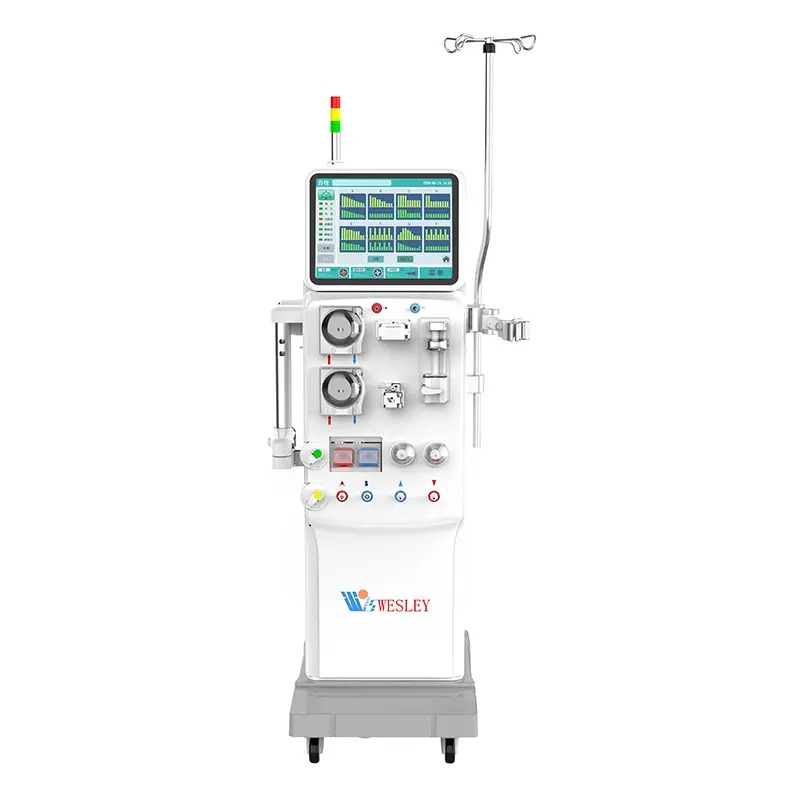
Delivering HDF therapy sets higher performance requirements for dialysis equipment and supporting infrastructure. Hemodialysis machines configured for online HDF must generate qualified sterile replacement fluid on-site.
Throughout the full treatment cycle, close monitoring is mandatory for dialysate safety, conductivity, temperature and ultrafiltration accuracy. Dialysis centers depend on robust built-in equipment alarm systems for risk mitigation. Whenever fluid parameters drift outside permitted thresholds, the device must trigger timely audible-visual alarms to safeguard patient safety.
3. Shifting Procurement Priorities Among Global Dialysis Facilities
For equipment manufacturers and overseas distributors, HDF-enabled dialysis equipment is no longer considered a premium optional feature. A rising number of public and private dialysis facilities now list online HDF compatibility as one core evaluation criterion during equipment tendering and procurement.
Beyond consistent hardware performance, purchasers also place high priority on comprehensive compliance documentation, complete factory inspection records, and localized clinical operation-training services.
4. Market Barriers & Adoption Status in Emerging Regions
Reimbursement policy remains a key limiting factor for worldwide HDF adoption. Regions with favorable reimbursement frameworks see markedly faster clinical roll-out of high-volume HDF.
Across numerous emerging markets, medical institutions are steadily building clinical experience and upgrading hardware infrastructure to prepare for offering HDF therapy to local kidney-disease patients.
5. Outlook for Global HDF Development
Moving forward, as nephrology clinical expertise expands and reimbursement systems continue to improve, global adoption of high-volume hemodiafiltration will keep growing.
At Chengdu WESLEY, we deliver reliably-performing HDF-capable hemodialysis machines, complete blood-purification solutions and professional technical support. We stand ready to unlock greater market potential for our partners across the global dialysis industry.
6. Contact Us
Should you have inquiries about our HDF-compatible hemodialysis systems, please reach out to our sales team for detailed product specifications and supporting documentation.
Post time: Sep-28-2026


