




What is HDF(Hemofiltration)?
62-year-old Mr. Wang, who has had 5 years of maintenance hemodialysis, suffered from severe generalized pruritus (worse at night) and occasional knee dull pain for 6 months. His symptoms barely improved with regular dialysis, and a follow-up showed elevated PTH. Initially hesitant about the complicated process of HDF recommended by doctors, he agreed to try it. After several sessions, his itching subsided, he slept well, dialysis-related dizziness and muscle cramps decreased significantly, and his mental state improved. He now takes the initiative to recommend the treatment to other dialysis patients:: “This upgraded version of dialysis really makes a difference!”
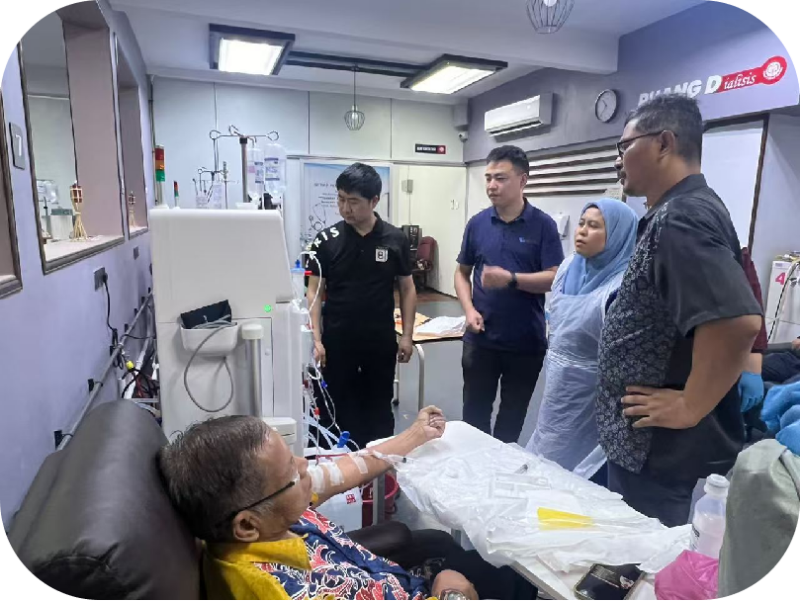
01 What is HDF(Hemofiltration)?
To put it Simply, HDF is a combination of hemodialysis (HD) and hemofiltration. It retains the core function of HD in clearing small molecular (e.g. urea, creatinine), while adding a filtration process. Like a healthy kidney, it uses a pressure gradient to clear more middle and large toxins (e.g. β2-microglobulin, parathyroid hormone).
02 Core advantages of HDF compared to traditional dialysis
For long-term dialysis patients, the accumulation of middle and large molecule toxins is main cause of skin pruritus, bone pain, and cardiovascular problems. The core advantage of HDF is precisely aimed at this issue:
(1) Comprehensive tox removal
Removes small molecule toxins (urea creatinine) and difficult-to-clear middle/large molecules (β2-microglobulin, PTH) reducing complications such as renal osteopathy and skin pruritus.
(2) More Comfortable Treatment Experience
Replacement fluid supplementation stabilizes electrolyte and fluid balance, lowering risks of hypotension, dizziness, muscle cramps, and post-dialysis tiredness.
(3) Significant Long-term Benefits
Regular HDF improves nutrition, sleep quality and cardiovascular health, boosting long-term dialysis patients’ overall quality of life.
03 Which kidney patients are suitable for choosing HDF?
- Patients who have developed obvious dialysis-related complications, such as recurrent skin itching, bone pain, or joint discomfort.
- Patients with persistently elevated parathyroid hormone (PTH) levels that are difficult to control with conventional hemodialysis.
-
Patients who often feel discomfort during dialysis, such as hypotension or muscle cramps.
- Patients who hope to further improve the treatment and reduce the risk of long-term complications.
The suitability for HDF therapy must be comprehensively evaluated by a professional doctor based on the specific condition of the patient and results of laboratory examinations. It is not advisable to make a decision on your own.
04 What Should Patients Note When Undergoing HDF?
(1). No Extra Preparation RequiredThe treatment process and puncture method of HDF are basically the same as those of conventional hemodialysis. Patients do not need to learn additional operations, nor do they have to change the dialysis frequency (usually still 3 times a week).
(2). Pay Attention to Anticoagulation and Replacement Fluid
Anticoagulants (e.g., low-molecular-weight heparin) are used during treatment to prevent blood clotting. Patients with a tendency to bleed must inform their doctors in advance. The replacement fluid is sterile and prepared uniformly by the hospital, so its safety is fully guaranteed.
Post time: Jan-15-2026


